📞 +86 188 2550 1449 💬 WeChat / WhatsApp:18825501449 ✉ sales@kunningcryo.com
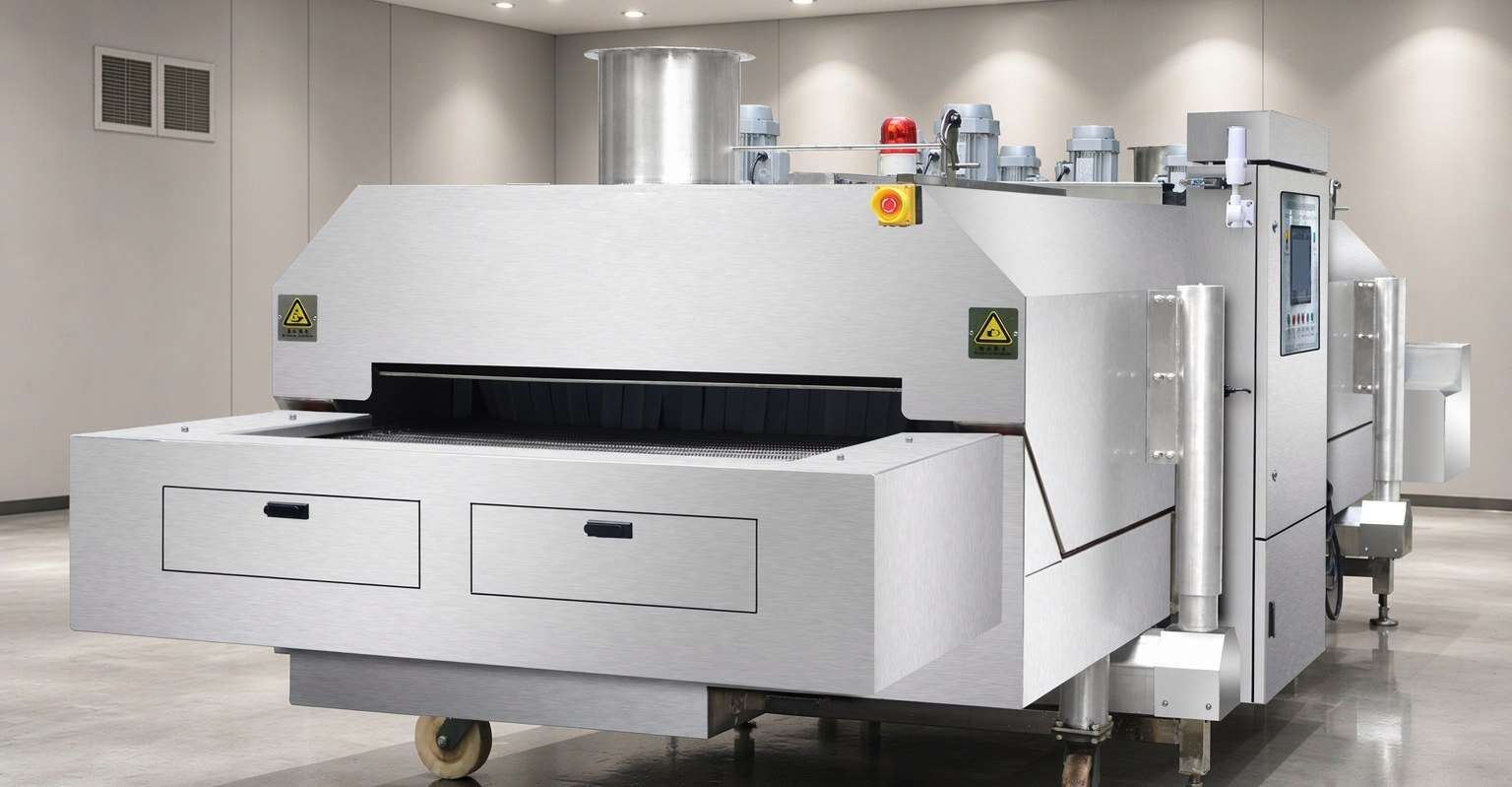
Liquid nitrogen freezing tunnel

Before buying freezing equipment, a food processor usually has to answer a few questions: which freezing method suits the product, how batch weight and throughput map to a machine size, how to estimate freezing time, and where quality differences actually come from. Most of those answers are not in a datasheet — they depend on product form, packaging and line rhythm.

Typical topics

  • Freezing method comparison: how liquid nitrogen freezing and mechanical (compressor) freezing differ in cooling rate, ice crystal formation and suitable products
  • Equipment selection: when to use an LN2 cabinet freezer (LFC-300 / LFC-600 / LFC-1200), an LN2 tunnel freezer (LFT-1206), an immersion chiller or a food blast chiller
  • Capacity and rhythm: estimating throughput and nitrogen consumption from batch weight, inlet temperature and target core temperature
  • Frozen product quality: ice crystal size, drip loss, colour, and texture after thawing
  • Ancillaries and safety: nitrogen tanks, vaporisers, ventilation and oxygen monitoring requirements
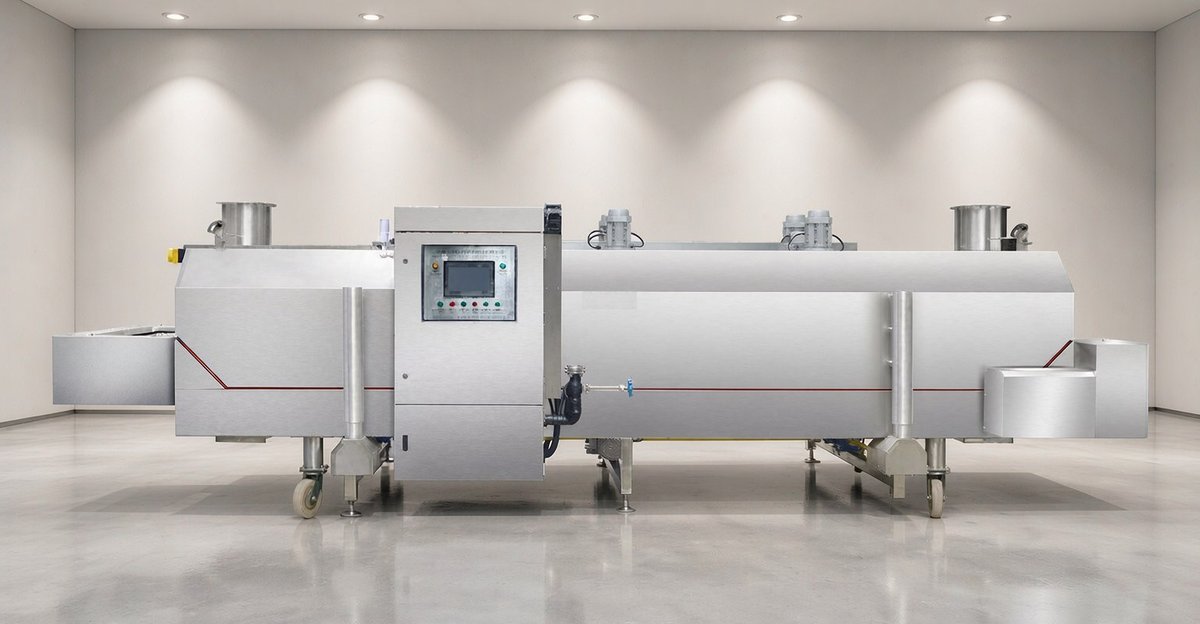
DKN-LFT-1206 liquid nitrogen tunnel freezer line
[DKN-LFT-1206](/en/products/dkn-lft-1206/) liquid nitrogen tunnel freezer line

Power Distribution and Control Cabinets for Quick Freezing Equipment: From 2.5 kW to 320 kW, How to Connect on the Site Side

Liquid nitrogen freezing cabinets draw 2.5–12 kW, tunnel lines 9–26 kW, immersion chillers 320 kW, all at 380V/50Hz. This article lists power ratings by model and explains the boundary from the worksh

2026-10-27

After Quick-Freezing Discharge: How to Connect Packaging, Transfer and Cold Storage Without Losing Temperature

At the moment products exit the liquid nitrogen quick-freezing equipment, core temperature has just passed -18℃ while quality keeps changing. During the tens of minutes from discharge and transfer to

2026-10-20

Batch or Continuous: Choosing Between a Liquid Nitrogen Freezing Cabinet and a Tunnel

Liquid nitrogen freezing cabinets and tunnels are not two ways of doing the same thing: the former loads by batch and opens the door for in/out access, while the latter runs continuous product flow on

2026-10-16

Temperature Fluctuations and Ice Crystal Recrystallization During Frozen Storage: Quality Keeps Changing After Freezing Is Complete

Freezing completion does not mean quality is fixed. During frozen storage, temperature rises and falls, small ice crystals melt and water refreezes on the surface of existing larger crystals, structur

2026-10-13

Ventilation and Noise Design for Liquid Nitrogen Quick-Freezing Workshops: Exhaust Air Volume, Airflow Organization, and Noise Control

Ventilation in liquid nitrogen quick-freezing workshops must remove vaporized nitrogen and maintain workshop temperature, humidity, and airflow. This article covers exhaust air volume estimation, inle

2026-10-11

Selection of Freezing Equipment Under Voltage and Frequency Differences in Export Markets: How to Confirm 50/60Hz and 380~480V

The same LN2 freezing equipment shipped to different countries faces different power conditions: voltages of 380V, 400V, 415V, 440V, 480V and frequencies of 50Hz and 60Hz. This article explains which

2026-10-11

On-Site Acceptance and Trial Run of Quick Freezing Equipment: No-Load, Full-Load and Cooling Curve Acceptance Items

After liquid nitrogen quick freezing equipment is installed, acceptance is done in three steps: no-load trial run, full-load trial run, and verification by cooling curve and core temperature.

2026-10-11

Maintenance Cycles and Consumable Parts List for Liquid Nitrogen Quick Freezing Equipment

Daily, weekly, monthly and annual maintenance items for liquid nitrogen quick freezing cabinets and tunnels, with a consumable parts list covering door seals, fans, liquid feed valves, probes and insu

2026-10-11

Liquid Nitrogen Freezing Equipment in Hot and Humid Climates: On-Site Operating Points for Southeast Asia and the Middle East

In workshops above 35℃ and 80% humidity, condensation, exhaust, control cabinet heat dissipation and pipe insulation for liquid nitrogen freezing equipment face new issues. This article lists five on-

2026-10-11

Key Points for Liquid Nitrogen Tank and Cryogenic Piping Design: From Tank to Freezer Interface

The piping between a liquid nitrogen tank and a freezer involves vacuum-insulated lines, safety relief, vaporizers and interface locations. This article covers tank sizing, pipe selection, safety devi

2026-10-11

Hygienic Design and Material Selection for Food Quick-Freezing Equipment: How to Handle Cleaning, Drainage and Joints

Hygienic design for liquid nitrogen freezing equipment in food workshops covers cleanable surfaces, drainage, joints and welds, and material selection. This article explains checkpoints for layout and

2026-10-11

How to Measure Liquid Nitrogen Consumption and Freezing Energy Use: Four Numbers to Record On-Site and the Calculation Method

Liquid nitrogen consumption per unit cannot be estimated; it must be measured. This article explains the metering devices to install on-site, the four numbers to record per batch, the calculation from

2026-10-11

How to Calculate Quick-Freezing Capacity: From Batch Weight to Equipment Unit Configuration

When building or expanding a quick-freezing production line, capacity calculation follows five steps: determine per-shift output, define product and batch size, calculate single-unit cycle time, calcu

2026-10-11

Frozen Food Equipment Sea Freight Packaging and On-Site Installation Preparation: A Checklist from Factory to First Startup

When liquid nitrogen freezer cabinets and freezing tunnels are exported, packaging methods, container loading and securing, arrival inspection, and on-site installation conditions must all be aligned

2026-10-11

Effects of Altitude and Atmospheric Pressure on Liquid Nitrogen Quick Freezing: Parameters to Verify for Plateau and High-Altitude Projects

As altitude rises and atmospheric pressure drops, the boiling point of liquid nitrogen decreases, changing cooling time and consumption for the same batch. This article covers four parameters to verif

2026-10-11

LN2 Consumption in Liquid Nitrogen Quick Freezing: What Pushes It Up and How to Control It On Site

LN2 consumption per batch in liquid nitrogen quick freezing is not a fixed value on the equipment; it is determined by product heat release, loading pattern, door-opening frequency and operating param

2026-10-06

Freezing Curve and Maximum Ice Crystal Formation Zone: Which Time Window Quick Freezing Really Needs to Win

The food freezing curve has a nearly flat plateau between -1℃ and -5℃, the maximum ice crystal formation zone that determines texture and juice retention after thawi

2026-10-02

Liquid Carryover and Condensate in Immersion Chillers: Discharge-End Air Knives, Medium Recovery, and Concentration Maintenance

Material exiting the freezing liquid carries medium out, while condensate on tunnel walls dilutes the bath. This article explains carryover factors

2026-09-29

Two Hours After the Cooked Food Leaves the Pot: From 60℃ to 10℃, How to Configure an Immersion Chiller

Cooked food must have its core temperature reduced below 10℃ within two hours after leaving the pot. Air cooling and immersion cooling use different heat exchange pa

2026-09-28

Temperature Control Accuracy and Temperature Uniformity of Liquid Nitrogen Freezers: What ±1℃ and ±3℃ Mean

Temperature control accuracy and temperature uniformity are not the same thing: ±1℃ is the temperature fluctuation at a measurement point

2026-09-28

Prepared Dish Sauce Packet Quick Freezing: How to Determine Core Temperature and How to Split Batches

The draft national standard for prepared dishes prohibits preservatives and requires a core temperature no higher than -18℃ at the end of freezing.

2026-09-28

How to Determine the Freezing Cycle of a Liquid Nitrogen Quick-Freezing Tunnel: Coordination of Mesh Belt Speed, Loading Capacity and Feed Temperature

Tunnel output is not a fixed figure. Based on the mesh belt dimensions and adjustable freezing cycle ranges of Kunning Cryo DKN-LFT-1206 / 1212 / 1612

2026-09-28

Exhaust and Oxygen Concentration Monitoring for Liquid Nitrogen Freezers: Where Nitrogen Goes and How to Set Alarm Values

Liquid nitrogen freezers rely on nitrogen for cooling, but if it can't be exhausted, it becomes a safety risk. This article explains nitrogen overflow paths

2026-09-28

Why the Cooling Speed of a Food Blast Chiller Varies from Batch to Batch: Airflow Path, Tray Load Thickness and Evaporator Frosting

The cooling time of the same blast chiller can vary widely between batches. This article breaks down the forced cold-air cooling path: heat conduction from the food

2026-09-27

Liquid Nitrogen Freezing vs Compressor Freezing: How to Choose

How to choose between liquid nitrogen freezing and compressor freezing: cooling rate, ice crystal size, drip loss, equipment footprint and site requirements

2026-09-13

How to Choose an LN2 Blast Freezer: LFC-300 / 600 / 1200

Choose an LN2 cabinet freezer by batch weight, throughput, product form and target core temperature: LFC-300 300 kg/h, LFC-600 600 kg/h

2026-09-13