
Maintaining quick freezing equipment is not difficult, but the items are spread across several areas, and missing one will show up in consumption. Dividing maintenance into daily, periodic and annual levels, with a fixed set of items at each level, is easier than repairing after problems arise.
Maintenance Items and Cycles
| Level | Cycle | Items |
|---|---|---|
| Daily | Each shift | Observe for abnormal vibration or noise during operation; check door seal fit; check liquid nitrogen piping for frost or dripping; record operating parameters |
| Weekly | Every week | Clean frost from air ducts and fan blades; check door hinges and locking; check drainage and floor |
| Monthly | Every month | Measure temperature control probe deviation; check liquid feed valve action; check electrical cabinet temperature and clean dust; tighten electrical connections |
| Annual | Every year | Check insulation integrity; systematic inspection and replacement of seals; grease or replace motor bearings; functional test of safety devices |
This cycle applies to production lines running under normal conditions. For high-load, multi-shift or high-temperature high-humidity sites, the frequency of weekly and monthly inspections should be increased.
Consumable Parts Concentrated in Five Areas
| Location | Common Issues | Replacement Criteria |
|---|---|---|
| Door seal / gasket | Aging and hardening, deformation, poor sealing | Local frost or cold leakage after closing; uneven compression marks on sealing surface |
| Fan / fan blade | Bearing noise, reduced speed, frost imbalance | Noticeably increased noise, reduced air volume, excessive vibration |
| Liquid feed valve / distributor | Slow action, flow deviation, clogged nozzle | Increased consumption per batch under same parameters, slower cooling curve |
| Temperature probe | Reading drift, slower response | Deviation from standard meter exceeds allowable range |
| Insulation / pipe insulation | Water ingress, damage, local frost | Frost or dripping on outer surface, upward trend in unit consumption |
Among these five areas, door seals and insulation are easily overlooked, because when they fail they do not trigger alarms — they only let liquid nitrogen consumption creep up. It is advisable to review unit consumption records together with maintenance records, and check these two areas first when trends are abnormal.
Which Abnormalities Directly Drive Up Consumption
Ranked by impact, maintenance-related consumption increases typically come from:
- Poor door sealing: After each door opening, the cabinet recovers faster and liquid feed time lengthens;
- Frost on fan blades or reduced speed: Weakened air field, cold air cannot reach gaps between trays, center takes longer to reach target;
- Liquid feed valve deviation: Uneven liquid nitrogen distribution, local over-cooling and local insufficiency;
- Water ingress in insulation: Increased heat leakage, higher cabinet load;
- Probe deviation: Distorted temperature control, actual temperature does not match setpoint, possibly over-freezing or insufficient freezing.
For the composition of liquid nitrogen consumption and on-site controllable factors, see Liquid Nitrogen Consumption in Quick Freezing: What Factors Drive It Up and How to Control It On-Site; for unit consumption recording practices, see How to Measure Liquid Nitrogen Consumption and Freezing Energy.
Boundary Between Cleaning and Maintenance
Food workshops often use high-pressure water washing. Quick freezing equipment is electrically live and has insulation and low-temperature piping. Before washing, power must be cut off, and the following areas must be avoided:
- Electrical cabinets, junction boxes, instruments;
- Interior of air ducts and motors;
- Insulation seams and areas not protected by sealing;
- Low-temperature piping connections.
Washable areas should follow equipment instructions and on-site hygiene regulations. After washing, confirm drainage is clear and no standing water remains before restoring power.
For workshop hygiene design and material selection principles, see Hygienic Design and Material Selection for Quick Freezing Equipment.
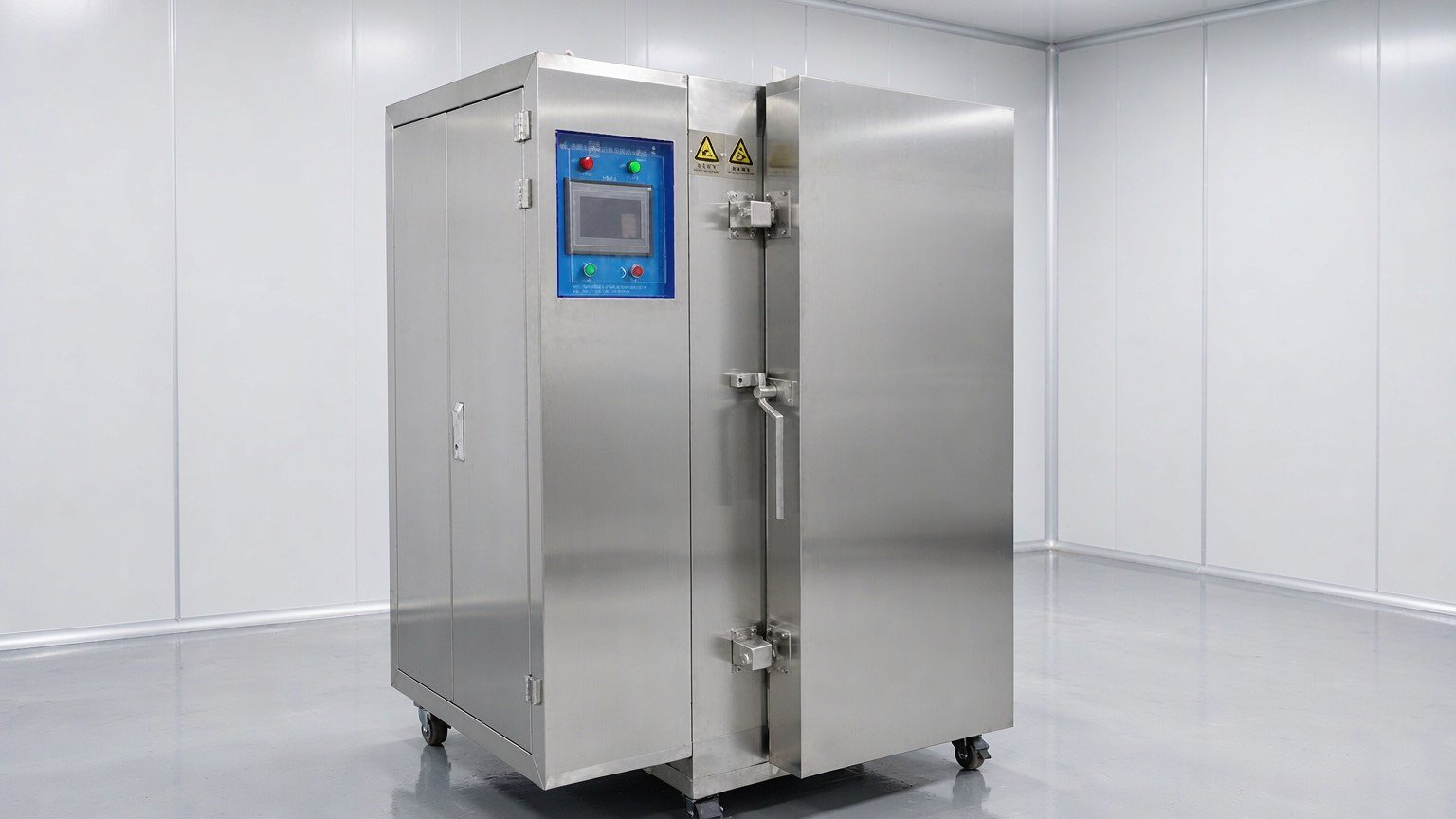
Spare Parts Recommendations
Keeping the following consumables on hand according to equipment quantity can avoid downtime waiting for parts due to minor issues:
- One set of door seals and gaskets;
- One fan bearing or complete fan blade;
- Liquid feed valve spare and distributor;
- One temperature probe;
- Common electrical components (contactors, relays) one each.
The spare parts list is configured according to the actual model. The corresponding model and specifications are provided in the documentation supplied with the equipment at delivery. For production line equipment, it is advisable to keep one shared set of key consumable parts per machine quantity.
Frequently Asked Questions
Can maintenance cycles be fixed to a set number of months?
Not recommended. Normal operation can follow monthly inspections; multi-shift, high-load or high-temperature high-humidity sites should shorten the cycle. The basis for judgment is consumption trends and equipment condition, not the calendar.
How often do door seals need replacement?
There is no fixed time. The criterion is sealing effectiveness: local frost after closing, uneven compression marks, upward trend in unit consumption — then it is time to replace. Most sites encounter their first replacement within one to two years.
What should maintenance records include?
At minimum four items: maintenance date and items, parts replaced, unit consumption or cooling time before and after maintenance, and the person who performed it. Only with before-and-after comparison data can you judge whether the maintenance solved the problem.
Can annual maintenance be done in-house?
Daily and weekly inspections can be done on-site. For parts involving the refrigeration system, vacuum insulated piping, and functional testing of safety devices, it is advisable to have the manufacturer or professionals perform them, to avoid improper operation affecting equipment safety and performance.
To request a maintenance item list or spare parts list for a specific machine, send us the model and operating conditions, and we will provide the corresponding maintenance items and spare parts recommendations by model: Contact Kunning Cryo
The maintenance cycles in this article are general equipment maintenance practices and can be adjusted according to on-site conditions; equipment maintenance locations and consumable parts are cited from Kunning Cryo liquid nitrogen quick freezing equipment technical documents. Each model is subject to the corresponding technical parameters and documentation supplied with the equipment.