There are two control points in prepared dish pack freezing that are easily skewed: first, treating time as the endpoint; second, loading patterns changing from batch to batch. According to the National Food Safety Standard: Prepared Dishes, released for public comment in February 2026, the core temperature of products requiring freezing should be no higher than -18°C at the end of freezing, and the discharge decision should be based on temperature readings. For prepared dish factories with many categories, small batch sizes, and frequent changeovers, cabinet-style liquid nitrogen blast freezers with variable loading, and tunnels when single products are stable, are two relatively suitable arrangements.
What the Draft for Comment Changes
On February 6, 2026, the National Food Safety Standard: Prepared Dishes, drafted under the leadership of the National Health Commission, was released for public comment . In its interpretation, Xinhua’s “Xinhua Viewpoint” quoted experts as saying that after removing preservatives, food safety mainly relies on physical means or process controls such as freezing, refrigeration, high-temperature sterilization, and modified atmosphere packaging . Reports related to the same round of public comment mentioned that the standard specifies that the core temperature of products requiring freezing should be no higher than -18°C at the end of freezing . Taken together, these three points bring the recording capability of the quick-freezing section to the forefront.
Material Characteristics of Prepared Dish Packs Determine Two Variables
Prepared dish packs can be roughly divided into three categories. Sauce-based packs have high moisture content, remain fluid after packaging, and have high thermal resistance inside the bag; chunk-based packs, such as braised pork and beef brisket, are filled with broth between chunks, resulting in uneven thickness; shredded and sliced packs, such as shredded pork with garlic sauce and sliced fish for pickled cabbage fish, are thin individually but regain thickness when stacked. What they have in common is that they are frozen with packaging, have high moisture content, and have inconsistent individual piece thickness.
When these characteristics are translated to the equipment side, only two adjustable variables remain: loading pattern and target core temperature. The thicker the stack, the longer the path for heat to travel from the center to the surface; the surface reaches temperature first, while the center lags behind.
Core Temperature Is the Endpoint, Not a Timer
According to the wording of the draft for comment, the core temperature of frozen products should be no higher than -18°C at the end of freezing. A common on-site practice is to ‘discharge after freezing for 40 minutes.’ This is feasible under a single category and a single load; after changing the category or load, the core temperature corresponding to the same period changes, and the time to reach temperature for trays on the outside and inside of the same batch is also inconsistent.
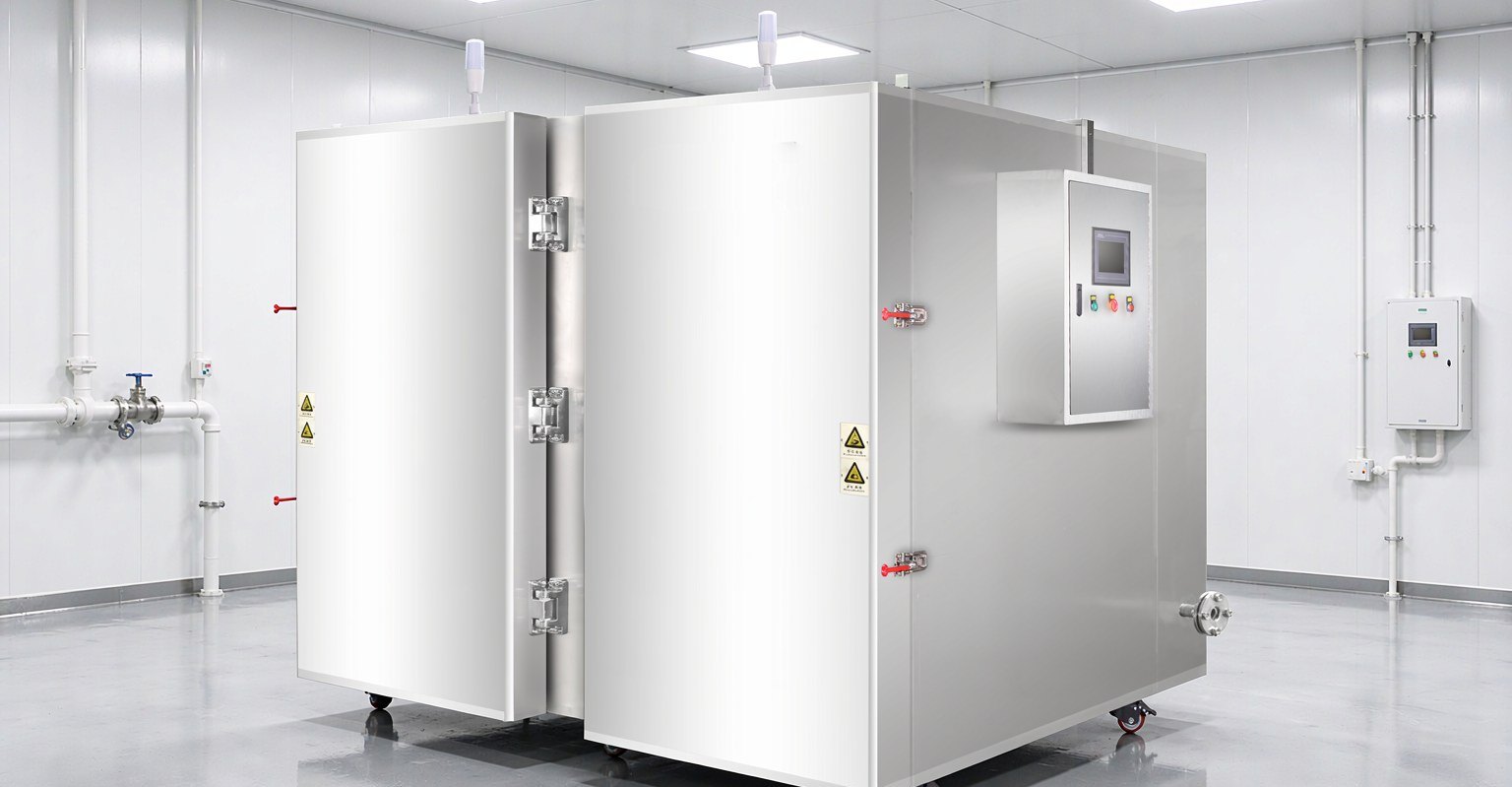
Kunning liquid nitrogen blast freezers use PT100 platinum resistance temperature sensors, with temperature control accuracy of ±1°C or ±2°C (depending on model). The discharge decision should take readings from the temperature measurement point and keep records by product to facilitate subsequent batch review.
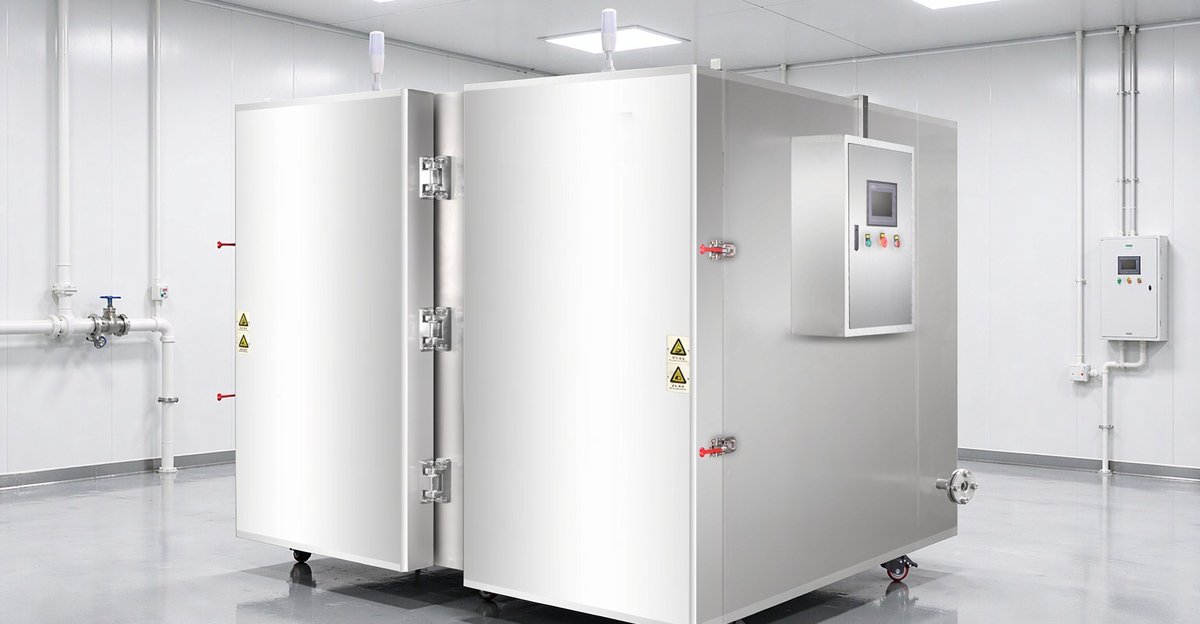
Multi-product, small-batch: batch changeover for cabinet models
| Model | Structure | Capacity / Load | Total Power | Temperature Control Accuracy |
|---|---|---|---|---|
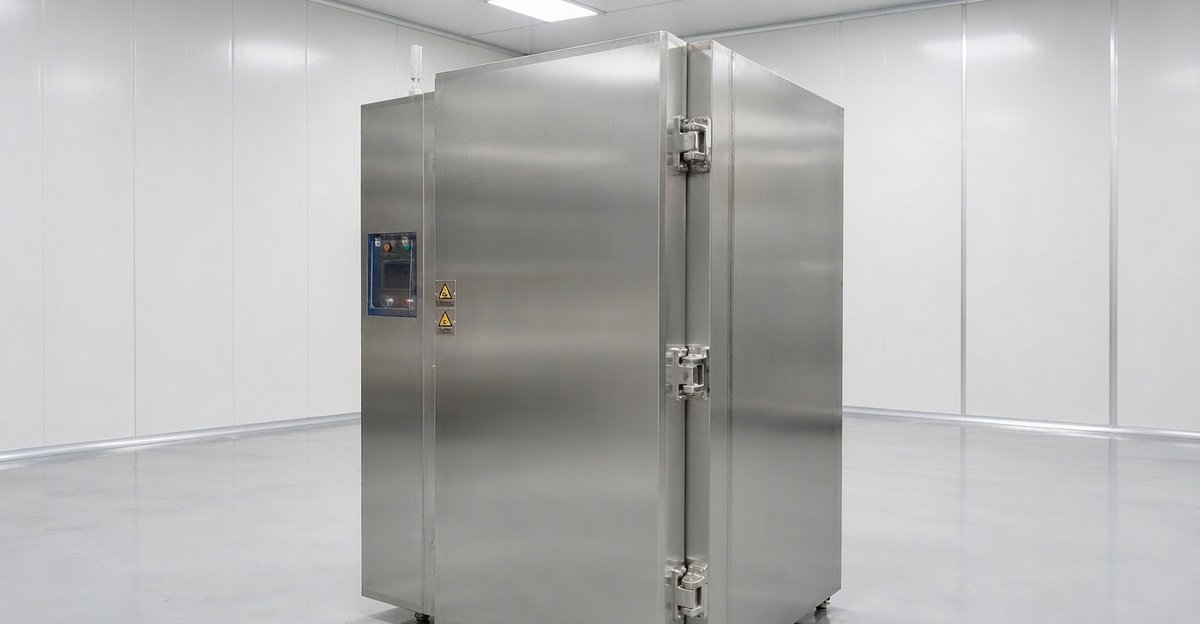
| DKN-LFC-300 | Single-door cabinet | 300 kg/h | 2.5 kW | ±1℃ |
| DKN-LFC-600 | Single-door cabinet | 600 kg/h | 5 kW | ±1℃ |
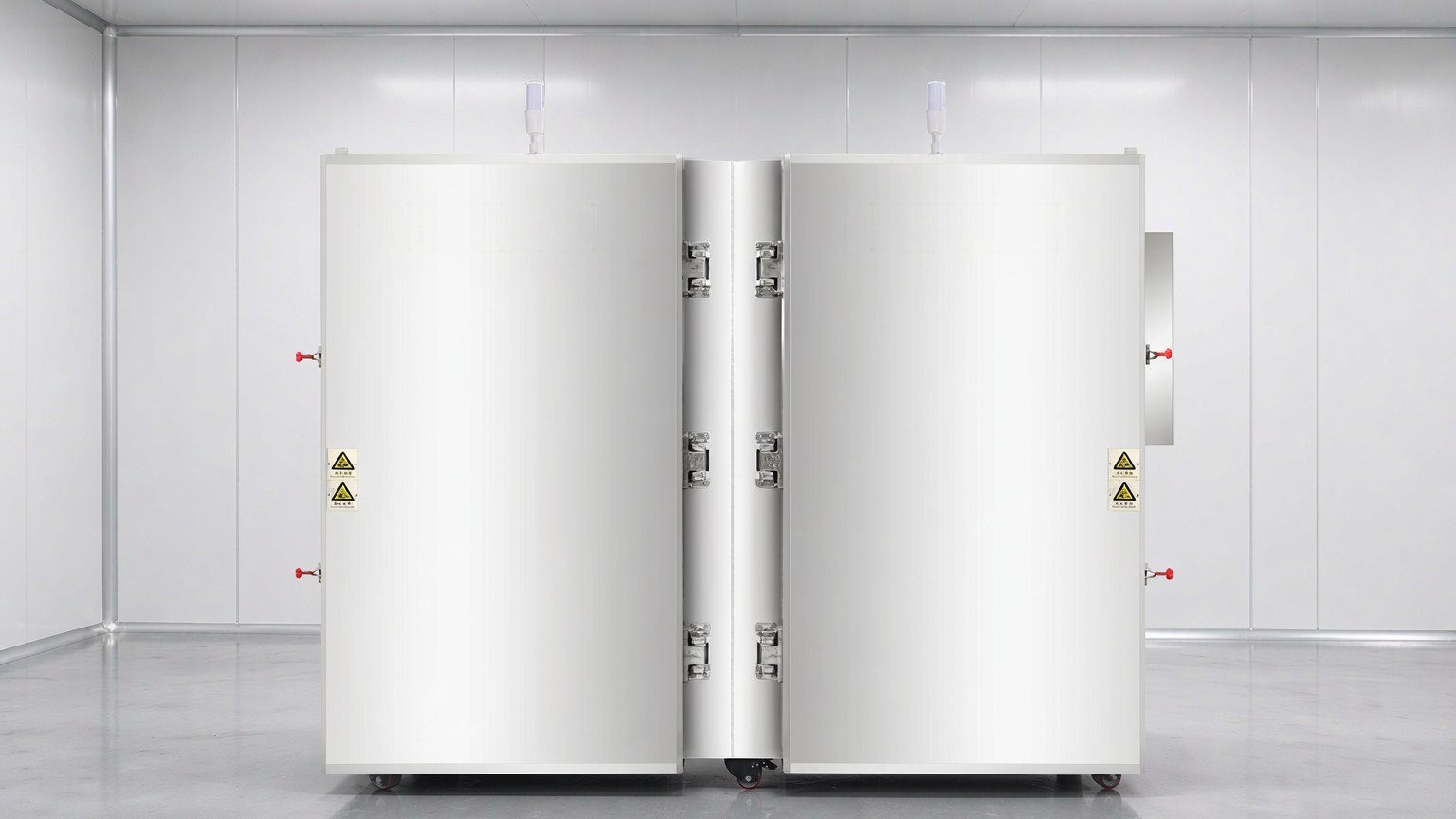
| DKN-LFC-1200 | Four-zone side-opening door | 0–1200 kg/zone | 12 kW | ±2℃ |
| DKN-LFC-1500 | Two-zone cabinet | 1500 kg/batch | 5 kW | ±2℃ |
When switching product categories, you only need to change the program, not the line. The DKN-LFC-1200 is divided into four independent zones to stagger output: one zone is freezing while the others are loading or unloading, using batch turnover to approach a continuous takt. In terms of no-load cooling, the DKN-LFC-300 and DKN-LFC-600 can achieve no less than 20℃/min, while the DKN-LFC-1200 and DKN-LFC-1500 can reach 50℃/min. For model comparison, see the liquid nitrogen quick-freezing cabinet product page.
Single-product stability, output priority: takt of tunnel lines
| Model | Mesh belt size (L×W) | Freezing cycle |
|---|---|---|
| DKN-LFT-1206 | 6000×1200 mm | 6–30 min adjustable |
| DKN-LFT-1212 | 12000×1200 mm | 5–25 min adjustable |
| DKN-LFT-1612 | 12000×1600 mm | 8–40 min adjustable |
The DKN-LFT-1612 has a nominal capacity of approximately 1000 kg/h, which varies depending on the product and packaging method. The tunnel is connected after portioning, and its takt must be aligned with the upstream stir-frying and filling processes; otherwise, material will pile up at one end while the other end waits for material. For how to convert between cycle and belt speed, see How to determine the freezing cycle of a liquid nitrogen quick-freezing tunnel.
Loading pattern determines whether batches run evenly
Products are placed on racks and trays, and heat is removed by cold air circulation inside the cabinet. Taking the DKN-LFC-300 as an example, the rack can hold 40 trays at a time; the tray size is 400×600×25 mm, and trays are to be provided by the buyer. Only when trays are laid flat with air channels left open can the center and edges reach temperature at approximately the same time; stacking and squeezing not only slows down cooling of the center, but packaging bags with a lot of broth are also prone to deformation and rupture. When the load changes, the discharge criteria must be adjusted accordingly and cannot follow the previous batch’s time.
Rapid cooling stage and on-site supporting conditions
The temperature of prepared food packages after stir-frying or cooking is 60–90℃. If this temperature goes directly into the quick-freezing cabinet, it means the liquid nitrogen equipment must first handle a sensible heat load. A more common arrangement is to separate cooling and freezing: out of the pot → food rapid cooling cabinet to 10–20℃ → portioning → liquid nitrogen quick-freezing to a core temperature not higher than -18℃ → cold storage.
The food blast chiller uses a forced cold air circulation, with an evaporating temperature of -40°C. A single cabinet holds 30 standard trays, each tray 3–5 kg, and two cabinets together hold about 200 kg. A single batch takes 1–2 hours, and the discharge temperature is adjustable from 3–10°C. It does not perform quick freezing; it only brings the material from the cooking temperature to the packaging temperature. For boundaries, refer to the food blast chiller product page.
Liquid nitrogen supply pressure depends on the model: DKN-LFC-300 and DKN-LFC-600 are 5–8 bar; DKN-LFC-1200 and DKN-LFC-1500 are 6–8 bar. The liquid nitrogen storage tank, transfer pipes, and exhaust ducts are provided by the user. The cabinet exhaust vent is located at the rear to prevent condensate from dripping onto the trays; the overall workshop ventilation is designed separately. Nitrogen is heavier than air and will accumulate near the floor. Oxygen concentration monitoring is a standard configuration, with a set range of 19.5%–21.5%. This range is for monitoring alerts and does not replace building ventilation design.
In terms of weight loss, liquid nitrogen quick freezing is recorded as 0.25%–0.5% according to product technical documents, while traditional blast freezers and freezing equipment are 3%–6%. For soup-based prepared meal packs, this difference is reflected in the amount of liquid exuded in the bag after thawing.
Related companies: Yuanxian Machinery manufactures vacuum pre-cooling and vacuum rapid-cooling equipment for fruit, vegetables and cooked food, and its export site Vacuum-Fresh handles overseas enquiries for that same vacuum cooling line.
Frequently Asked Questions
Can prepared meal packs be discharged based only on time after quick freezing?
For a single product type and a single load size, yes, but after changing the product type or load size, the center temperature corresponding to the same time will change. The judgment should be based on the temperature probe readings, with an endpoint requirement of at least -18°C according to standard specifications, and recorded per batch.
How much can tray temperatures differ at different positions within a batch?
The difference comes from loading density and whether the air circulation ducts are unobstructed. When trays are laid flat and circulation air channels are left open, the time to reach temperature at the center and corners is similar; stacking and squeezing will cause the center to lag noticeably, which is one of the reasons why some products in the same batch are not fully frozen.
For multiple varieties and small batches, should a cabinet or a tunnel be used?
For high frequency of product switching and small batch input, cabinet models are more suitable, as changing the program does not require changing the line. For stable single products with high output requirements, use a tunnel, but the tunnel cycle must be aligned with the upstream cooking and filling processes.
Can products be placed directly into the quick freezer after cooking?
Yes, but the equipment must first handle the sensible heat from 60–90°C, and liquid nitrogen consumption will be relatively high. Separating cooling from freezing—first cooling to 10–20°C in a food rapid chiller, then portioning and quick-freezing—is a fairly common practice.
Who provides the liquid nitrogen tank and exhaust duct?
The liquid nitrogen tank, liquid nitrogen delivery piping, and exhaust duct are provided by the user. On the equipment side, we provide the liquid supply valve, nozzles or diffusers, circulation fan, and exhaust gas extraction port; the liquid supply pressure is to be confirmed according to the model.
Please compile the product form, net content per bag, batch feed quantity, target core temperature, daily output, and workshop power supply specifications, and contact Kunning Cryo’s technical engineers to match the model and loading method: https://www.kunningcryo.com/en/contact/