
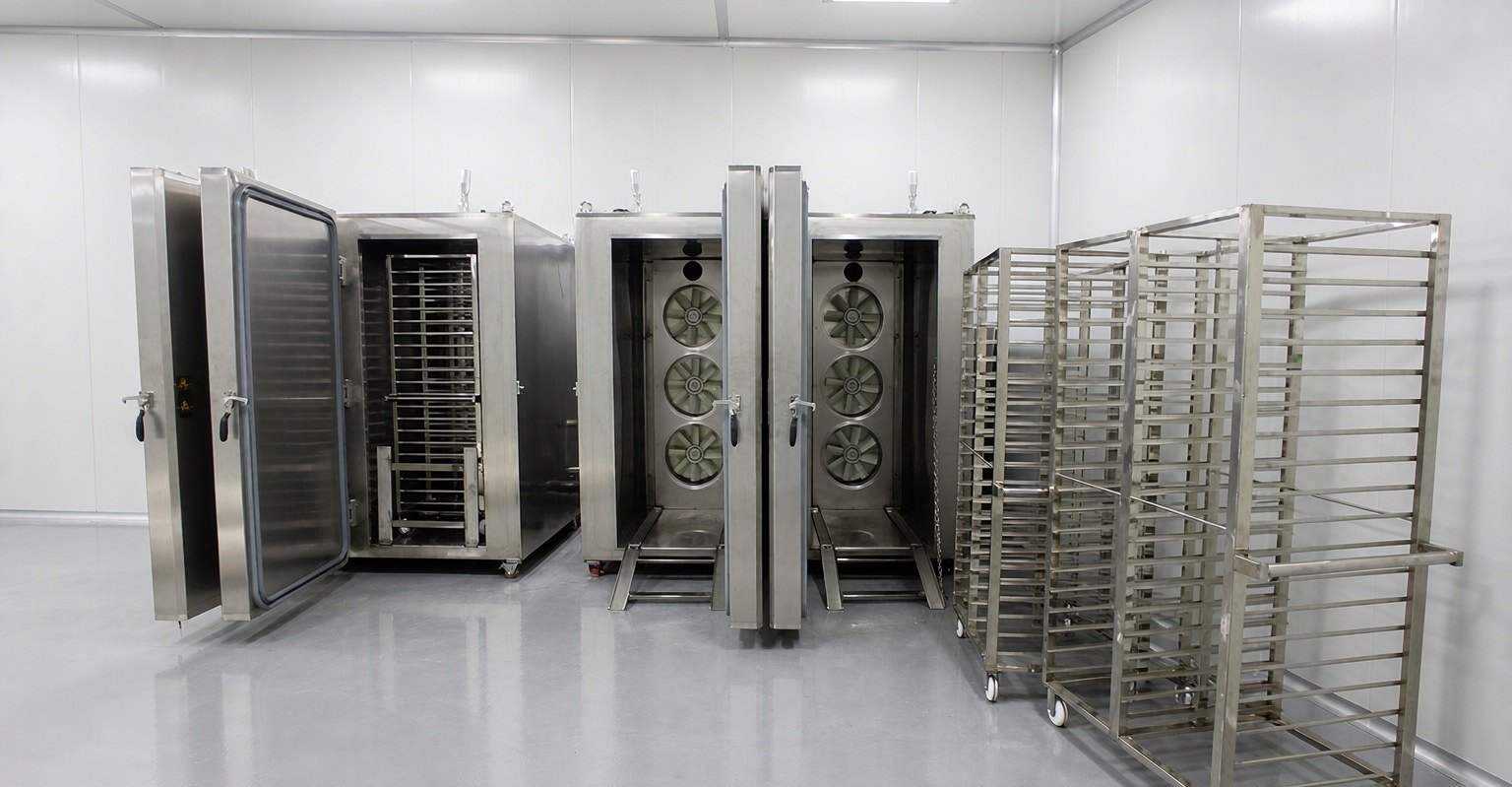
Industry: Pastry & dim sum food | Region: South China | Matched model: DKN-LFC-600 liquid nitrogen quick-freezing cabinet Customer information has been anonymized; the model configuration is a selection recommendation for similar capacity.
1. Application Background
The quick-freezing stage for pastry products is not quite the same as for pure meat products or seafood. Products such as steamed buns, dumplings, and dim sum come in dense variety and small batch sizes, and one shift has to rotate through several specifications: vegetable buns in the morning, a changeover to red bean paste at noon, then dumplings and shumai in the afternoon. Freeze too slowly and material piles up at the forming line; freeze unevenly and collapse, broken skin, and leaking filling will show up after steaming.
Many pastry plants in South China work in rented ready-built workshops, with the floor area laid out by workstation. The quick-freezing section is often squeezed between forming and packaging, with limited aisle width, carts that need to turn around, and space that must be left for personnel passage. Once the equipment is set down, the power connection point, the nitrogen inlet pipe, and the discharge direction are all fixed. If dimensions and material flow are not worked out in advance, changing them later is very difficult.
2. Process Challenges
First, the capacity rhythm and the batch size do not match. This kind of workshop does not run one product on one line; instead, several forming machines and several proofing cabinets feed the same quick-freezing section. Capacity rated by the hour and the actual load measured by batch often do not match — the rated capacity is sufficient, but with variety changes, tray changes, and waiting for full batches, the equipment actually starts and stops. Whether the equipment fits depends on whether it can withstand this intermittent rhythm.
Second, footprint and material flow are tightly constrained. Pastry items mostly go in and out on trays or transfer carts, not as loose individual pieces. The position where carts enter, the discharge direction, and whether the personnel walkway is shared directly determine whether the unit can fit into the existing workshop. A difference of a few tens of centimeters in external dimensions may be enough to block a fire escape route.
Third, how to choose between cabinet type and tunnel type. For small single batches and many varieties, installing a tunnel line both takes up space and makes specification changeover troublesome; for large and stable batches, the continuous feeding of a tunnel type runs more smoothly. In the pastry industry, this multiple-choice question is easier to get wrong than in a single product category.
3. Solution Configuration
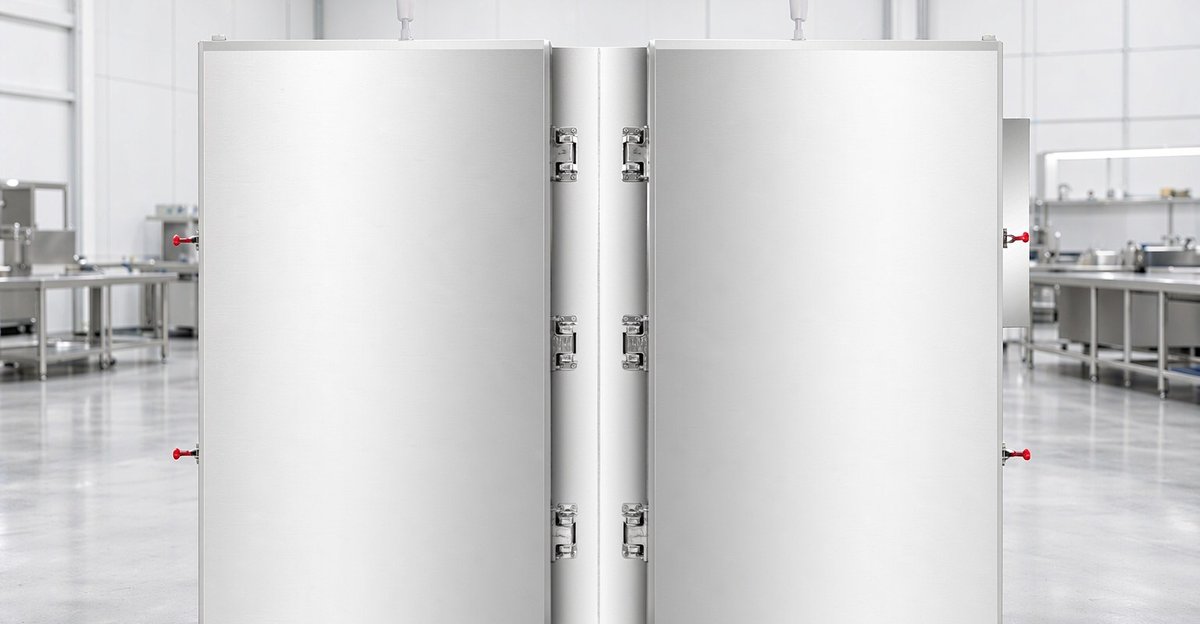
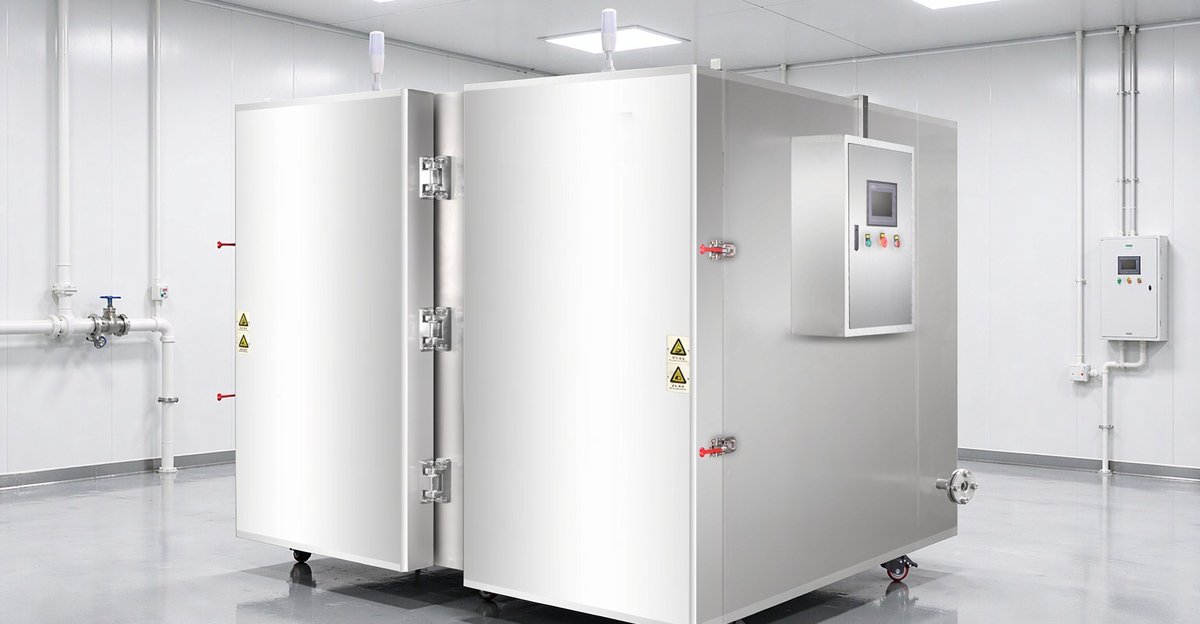
For pastry workshops with many varieties, small batches, and tight floor space, the DKN-LFC-600 liquid nitrogen quick-freezing cabinet is one of the common selection directions. The main parameters are as follows (quoted from the product technical document):
| Item | Parameter |
|---|---|
| Name | Liquid nitrogen quick-freezing cabinet |
| External dimensions | 2900 × 1700 × 2450 mm |
| Operating temperature | -150℃ ~ room temperature |
| Temperature control accuracy | ±1℃ |
| Temperature uniformity | ±3℃ |
| Cooling rate | Not less than 20℃/min (no load) |
| Capacity | 600 kg/h (varies with different products and packaging methods) |
| Total unit power | 5 kW |
| Refrigerant | 5-8 BAR liquid nitrogen |
Applied to this scenario, three points deserve particular attention.
The external dimensions of 2900 × 1700 × 2450 mm are those of the equipment body itself; when laying out the workshop, additional space must be reserved for door opening, feeding, and maintenance, and the usable aisle width should be confirmed against the measured workshop dimensions. The total unit power of 5 kW falls within the conventional power distribution range and does not involve a high-power refrigeration unit, so concerns about capacity upgrades in older plants are minor. The capacity of 600 kg/h is a rated value and varies with different products or packaging methods; for a specific product, it still has to be converted according to tray arrangement and single-batch weight.
4. Process Points
What matters in the freezing process is passing through the -1℃ to -5℃ range, known in the industry as the zone of maximum ice crystal formation. Pastry dough contains water in its structure; if ice crystals grow coarse, both the gluten network and the filling structure are damaged, and after steaming the result is collapse, loss of shape, and leakage of juices.
Only when this cooling period is kept short do the ice crystals stay fine and the structure hold. The DKN-LFC-600 has a cooling rate of not less than 20℃/min (no load), and its operating temperature covers -150℃ to room temperature; the cabinet temperature can be pulled down, so the surface temperature of the material drops quickly after loading.
A temperature control accuracy of ±1℃ and temperature uniformity of ±3℃ govern whether conditions are similar at different positions inside the cabinet and between different batches. The number of trays loaded at one time varies for pastry products; only when the temperature difference between points in the cabinet is small will the inner and outer positions on the same tray freeze to a similar degree.
Two points of field experience. Liquid nitrogen is supplied at 5-8 BAR; the cabinet door opens and closes frequently during loading and unloading, so nitrogen consumption is related to the operating rhythm — try to load and unload with the cabinet as full as possible. Nitrogen is colorless and odorless, so the workshop must be equipped with oxygen concentration monitoring and ventilation; in small enclosed workshops this point especially cannot be omitted.
5. Target Applications and Selection Recommendations
The workshops this configuration suits are roughly those producing pastry, dim sum, and dumpling products, with frequent variety rotation, single batches in the several-hundred-kilogram range, a forming line and quick-freezing section that must respond quickly to each other’s rhythm, and limited floor space with no wish to build a separate production room for the quick-freezing section.
Conversely, if product specifications stay unchanged year-round and batches are large and continuous, with discharge going directly to the packaging line, a tunnel type runs more smoothly; belt width and line length should be confirmed separately according to the production line layout.
The judgment sequence can go like this: first count the number of varieties and the daily changeover frequency, then estimate the upper limit of single-batch loading weight, and finally match the equipment’s external dimensions against the usable length and width dimensions of the workshop. Once these three items are clear, the answer of cabinet type versus tunnel type basically emerges. Specific models and configurations must be confirmed separately according to product form, tray specifications, measured workshop dimensions, and local power supply conditions.
Customer information has been anonymized; the model configuration is a selection recommendation for similar capacity.