
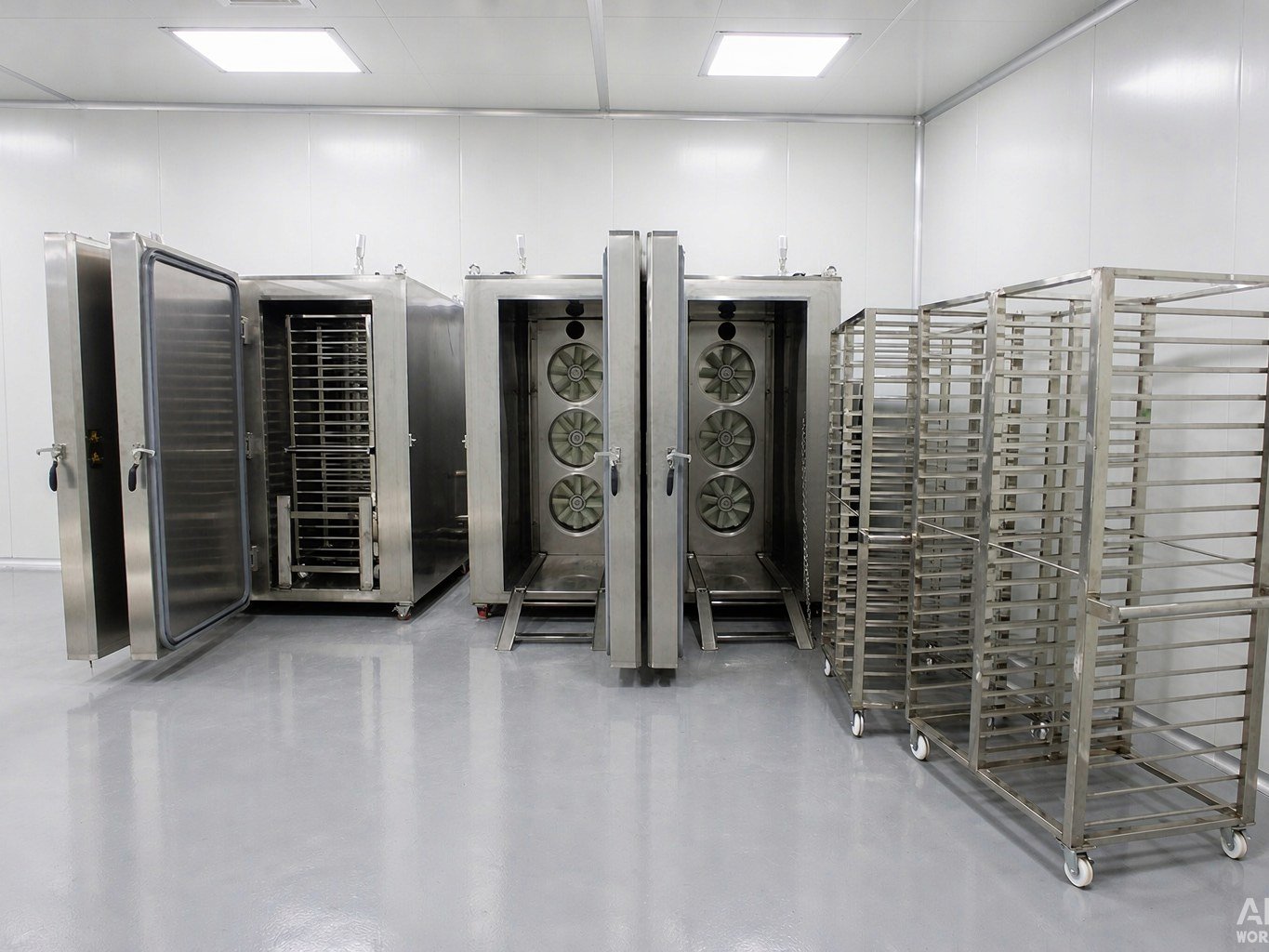
A fruit and vegetable juice processing enterprise in East China mainly produces tuberous fruits and vegetables, berries, and fruit pulp juice drinks. The quick-freezing section needs to balance color and texture after thawing, while orders are shipped to multiple export destinations. Power supply, packaging, and non-standard dimensions — these three matters must be clarified at the proposal stage. Under similar capacity, the available model is the DKN-LFC-600 liquid nitrogen quick-freezing cabinet: cabinet-type structure, operating temperature -150℃~room temperature, temperature control accuracy ±1℃, temperature uniformity ±3℃, no-load cooling rate not less than 20℃/min, capacity 600 kg/h (varies with different products and packaging methods), total power 5 kW, refrigerant 5-8 BAR liquid nitrogen. Below, these three lines are broken down to explain what can be defined and what must be confirmed per order.
一、应用背景
The product forms in fruit, vegetable, and juice processing are quite diverse: tuberous types like potatoes and carrots need to be cut into pieces or diced before quick-freezing; berries are frozen whole, with thin skins and high moisture content; fruit pulp and juice drinks are mostly bagged, boxed, or barreled, and are no longer loose material when they enter freezing. The common point is that these products are sensitive to freezing speed — if frozen slowly, berries will collapse and release water, fruit pulp will separate, and tuberous types will become pithy after thawing.
Orders from such enterprises are often not concentrated in one market. The same workshop may run domestic sales and exports simultaneously, with batches switching weekly. Export orders have an additional layer of constraints: the voltage and frequency of the destination power grid differ, product packaging forms differ, and some factories have limited door and freight elevator dimensions, so equipment may not be able to enter directly in its standard external dimensions.
二、工艺难点
Power supply must be defined first for proper model selection later. Power distribution for export equipment cannot be covered by a single universal domestic approach. Voltage and frequency differ across destinations, and the selection of control circuits and electrical components must follow accordingly. If this is discussed after placing the order, rework and configuration changes are often required.
Packaging form directly affects capacity. The figure of 600 kg/h is obtained under specific products and packaging methods. Whole berries spread flat into trays versus bagged fruit pulp stacked into trays — these two loading methods have different loading quantities and heat exchange areas within the same cabinet space, and actual hourly output will vary. For bulk, single-layer, and stacked methods, the cycle times must be verified separately.
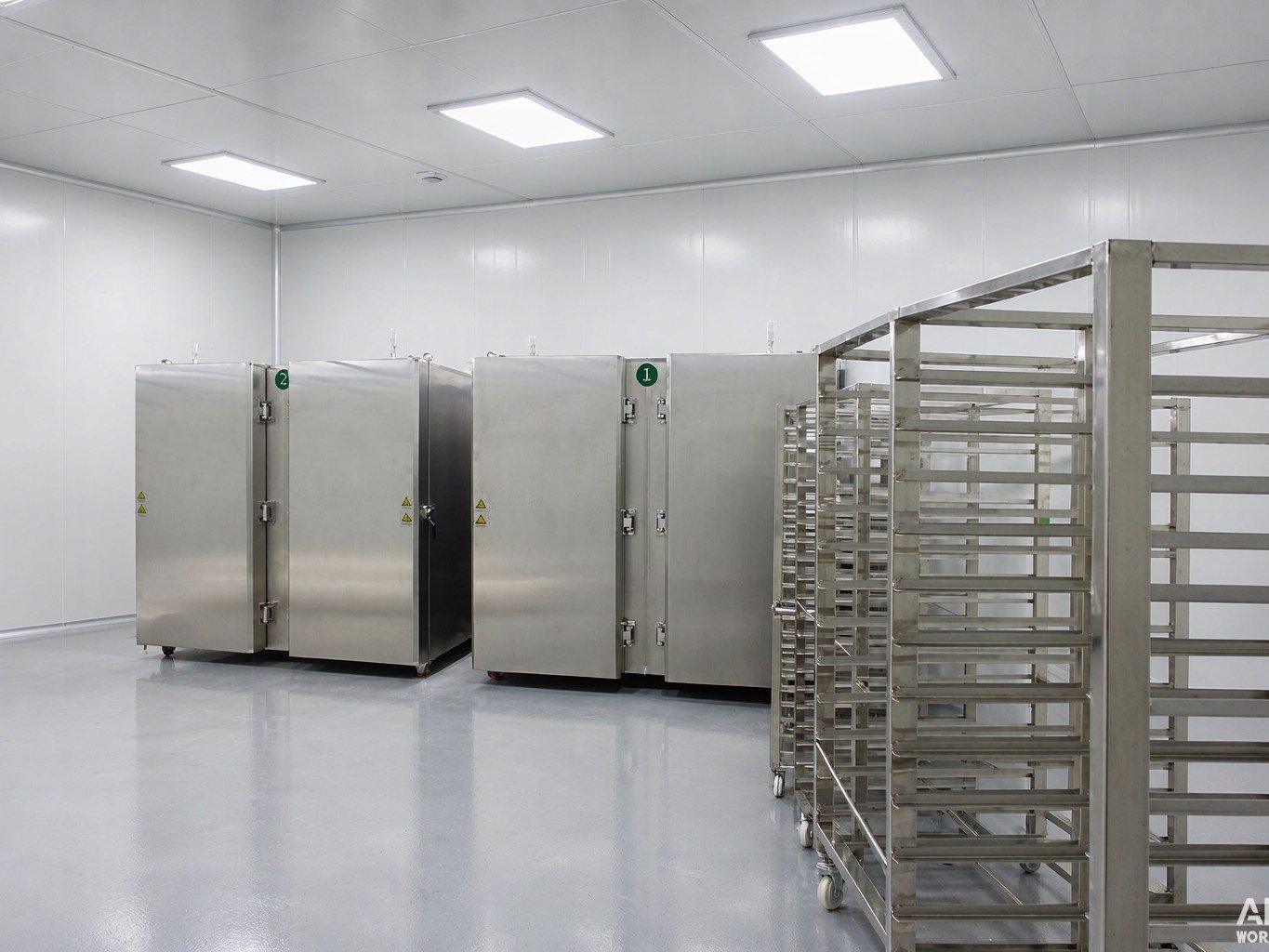
Non-standard dimensions must follow the factory building. The standard external dimensions are 2900 × 1700 × 2450 mm, which most workshops can accommodate. However, door openings, freight elevators, and overhead pipeline positions in cold rooms of older factory buildings often block entry — whether the equipment can enter as a whole unit, whether it needs to be split, and how much space to leave for door opening and cart turnover after positioning must all be verified against the floor plan at the proposal stage.
Export certification and accompanying documents. Destination markets have different requirements for equipment access and accompanying technical documents. This is confirmed per order, and no universal statement is written at the proposal stage.
三、方案配置
This scenario is suited to the DKN-LFC-600 liquid nitrogen quick-freezing cabinet, with parameters cited from product technical documents:
| 项目 | 参数 |
|---|---|
| 名称 | 液氮速冻柜(柜式) |
| 外尺寸 | 2900 × 1700 × 2450 mm |
| 工作温度 | -150℃ ~ 室温 |
| 控温精度 | ±1℃ |
| 温均性 | ±3℃ |
| 降温速度 | 不低于 20℃/分钟(空载) |
| 产能 | 600 kg/h(不同产品及包装方式有差异) |
| 整机功率 | 5 kW |
| 制冷剂 | 5-8 BAR 液氮 |
In terms of configuration logic, the cabinet-type model is suitable for export production lines with many varieties and moderate batch sizes. It does not occupy a continuous passage, and changing varieties only requires switching the process program, unlike tunnel lines where mesh belt speed and line layout must be considered. The cooling rate and temperature control accuracy determine whether the freezing window can be maintained, which is directly related to color and juice retention of berries and fruit pulp.
Power distribution, certification, packaging specifications, and non-standard external dimensions are all confirmed in the proposal according to destination and customer site conditions, without universal statements.
四、工艺要点
Tray loading determines even freezing. Berries are recommended to be spread in a single layer; tuberous types should be spread out after cutting; bagged fruit pulp should not be stacked too densely. Leave air channels between trays. Do not mix products with large thickness differences, otherwise the thin parts in the same cabinet will reach temperature first while the thick parts are still at a higher temperature, and the temperature uniformity indicator of ±3℃ cannot be realized.
Judging completion by core temperature. -150℃~room temperature is the usable operating range of the equipment, not the discharge target. Different products have different core cooling rates. Before discharge, measure the geometric center of the product; only when the reading is reached is it considered complete. Surface readings cannot be taken as the result.
No-load cooling and full-load cooling are two different things. Not less than 20℃/min is an indicator under no-load conditions. After loading materials, the heat exchange load increases, and the actual cooling time must be measured during the commissioning stage according to the product. This point must be clearly stated when quoting parameters to export customers.
Liquid nitrogen use sites must be arranged according to safety requirements. Liquid nitrogen in enclosed spaces will displace oxygen in the air. The workshop needs to be arranged according to ventilation and safety requirements. Nitrogen usage and ventilation methods are confirmed according to site conditions.
五、适用对象与选型建议
This configuration is suitable for enterprises that process fruit and vegetable tubers, berries, and fruit pulp juice drinks, have small single batch sizes with frequent variety changes, and have export orders. To judge whether to use a cabinet type or tunnel type, look at two points: whether orders are continuous enough that a line cannot stop — continuous large batches go to tunnel lines; many varieties, mixed batches, and limited workshop positioning — cabinet type is more suitable.
Before model selection, clarify these matters: export destination voltage and frequency, product packaging form and tray loading method, target core temperature, single batch input and daily cumulative volume, factory door opening and cold room clear height. For model parameters, see the 液氮速冻柜 DKN-LFC-600 产品页. For how to distinguish cabinet type from tunnel type, see 液氮速冻柜选型要点. On-site practices in similar industries are being compiled in 客户案例. To verify configuration according to your own products and export conditions, you can 联系我们.
常见问题
600 kg/h 的产能怎么理解?
600 kg/h is the capacity indicator of this equipment under specific products and packaging methods. Actual output will vary with different product forms and packaging methods. Whole berries spread flat and bagged fruit pulp stacked have different processing volumes in the same time. For the hourly output of a specific product, it must be confirmed at the proposal stage according to tray loading method and target core temperature.
出口设备的电源怎么定?
The power grid voltage and frequency of export destinations differ. The overall power distribution, control circuits, and selection of electrical components must be confirmed according to the destination. This is recommended to be settled before placing the order to avoid changing configuration after the equipment is built. The liquid nitrogen supply method and on-site piping should also be confirmed together.
非标尺寸能做到什么程度?
The standard external dimensions are 2900 × 1700 × 2450 mm, which most workshops can position directly. When factory door openings, freight elevator dimensions, or cold room clear height are limited, whether to enter in split sections and how to arrange inlet and outlet directions need to be confirmed according to the on-site floor plan, and specifically confirmed per order.
柜内温度到 -150℃,出料温度也是 -150℃ 吗?
No. -150℃~room temperature is the operating temperature range of the equipment. The discharge target is defined according to the product process. The conventional storage target for frozen products is -18℃. The specific discharge temperature and freezing time are confirmed according to product and packaging method.
客户信息已匿名处理,机型配置为同类产能选型建议。