
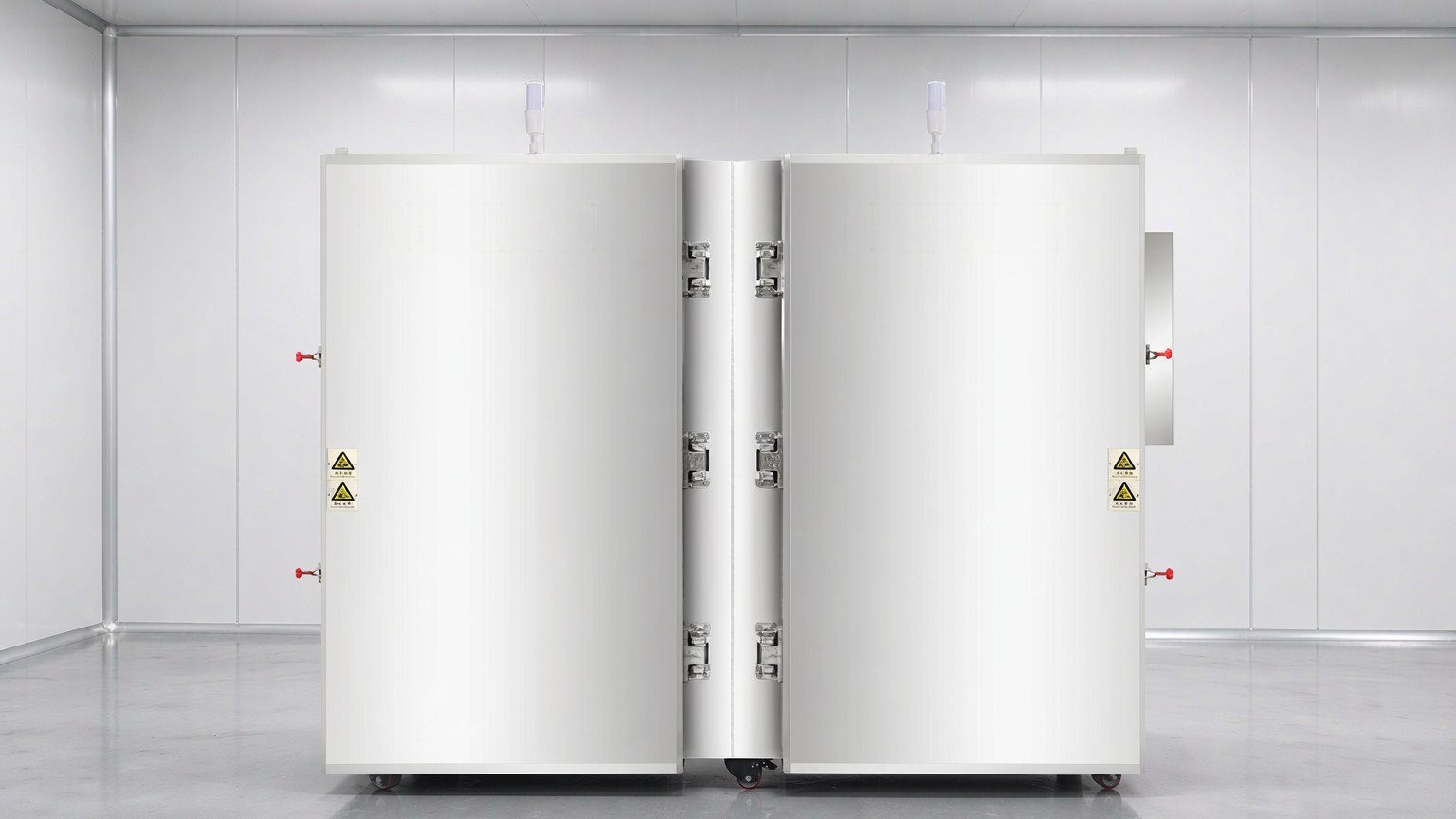
Industry: Research institutes and universities (food science experiments) | Region: Domestic (China) | Recommended model: DKN-LFC-300 liquid nitrogen quick-freezing cabinet Client information has been anonymized; the model configuration is a selection recommendation for comparable throughput.
1. Application Background
Freezing experiments run by food research teams and factory production lines are two different things. Factories chase throughput and yield; laboratories chase whether the same batch of experiments can be reproduced: the same formulation, the same inlet temperature, the same freezing curve — samples made today must be comparable with samples made next week. One batch is usually a few dozen trays, totaling between tens and several hundred kilograms, with a wide mix of varieties, small batch sizes, and something different frozen each time.
A large tunnel line is not suitable for this kind of scenario — a tunnel is built for continuous flow of a single product, and changing varieties means cleaning the mesh belt and re-adjusting parameters. A freezer cabinet or ultra-low-temperature freezer is even less suitable: natural convection cools slowly, the temperature difference between sample surface and core is large, the freezing curve spreads out widely, and the experimental conclusions are hard to reproduce. The liquid nitrogen quick-freezing cabinet has therefore become a routine choice in many laboratories: the cabinet volume holds a full batch of trays, cooling is fast and the rate is adjustable, and a batch of samples can complete the freezing process in a relatively short time.
2. Process Challenges
Batch consistency. When a laboratory runs comparative experiments, if the cooling rates of two freezing runs differ by a noticeable margin, the ice crystal sizes differ as well, and the subsequent texture, drip loss, and microscopy results will not match up. The equipment itself requires high temperature control accuracy and a stable no-load cooling rate, and the operating procedure must be standardized as well.
Sample loading, retrieval and transfer. How the trays are arranged, how many trays go into one cabinet, and how the time from loading to unloading is recorded — without fixed stations and fixtures for these actions, different operators will end up with different freezing times.
Safety in a low-temperature environment. The temperature inside a liquid nitrogen cabinet can reach -150°C; when the door is opened for loading or retrieval, cold vapor spills out and the oxygen concentration inside the cabinet is displaced by nitrogen. Laboratories have many people and frequent shift changes, so oxygen concentration monitoring cannot rely on human vigilance.
3. Solution Configuration
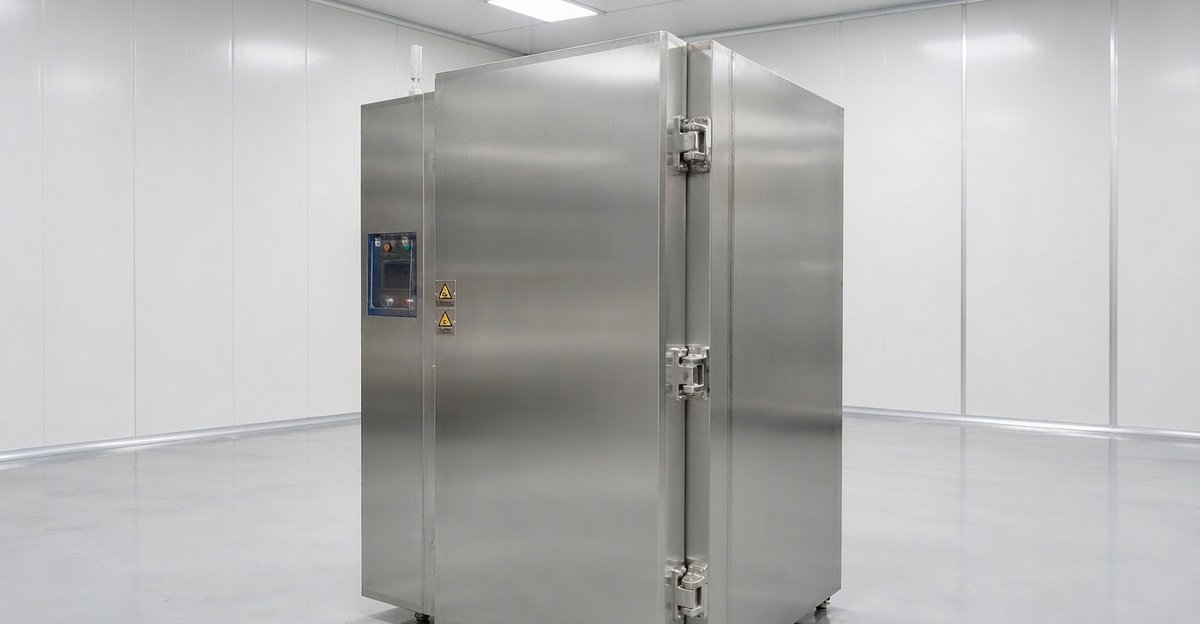
This scenario is suited to the DKN-LFC-300 liquid nitrogen quick-freezing cabinet, with the main parameters as follows (quoted from the product technical documentation):
| Item | Parameter |
|---|---|
| Internal cavity dimensions | 900 × 1320 × 1800 mm (W×D×H) |
| External dimensions | 1740 × 1730 × 2220 mm |
| Common working temperature | -150°C to room temperature |
| Temperature control accuracy | ±1°C |
| Temperature uniformity | ±3°C |
| Cooling rate | Not less than 20°C/min (no load), adjustable according to actual conditions |
| Throughput | 300 kg/h (varies with product and packaging method) |
| Total power | 2.5 kW |
| Refrigerant | 5-8 BAR liquid nitrogen |
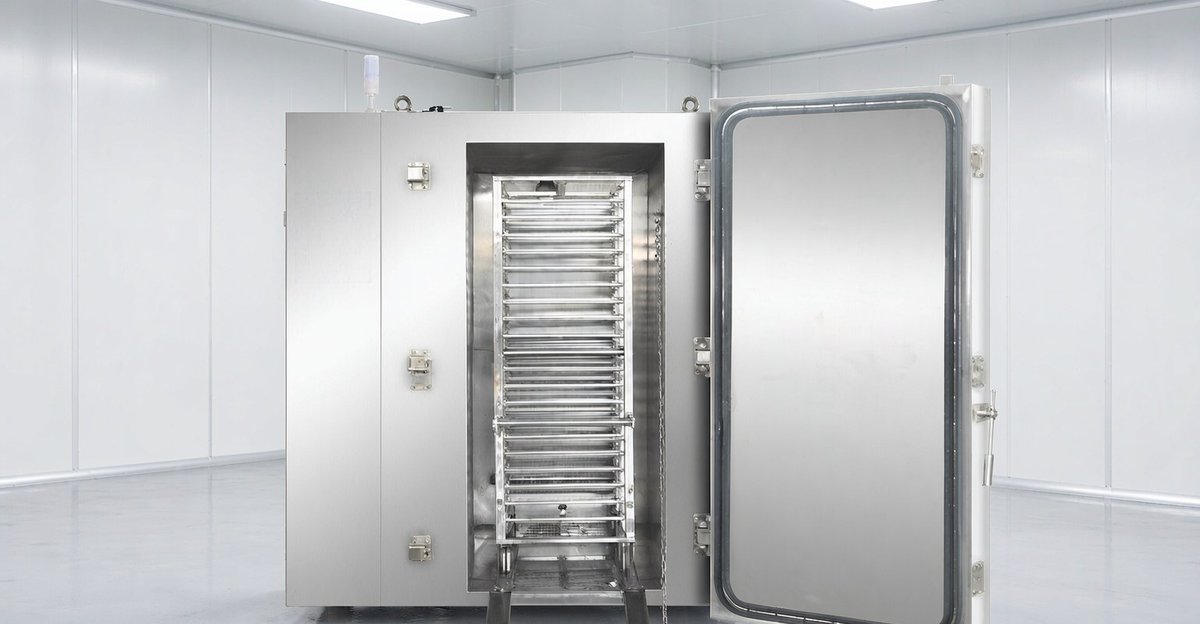
| Rack and trays | Rack clear height 1600 mm, width 605 mm, depth 807 mm, holds 40 trays at a time; trays 400×600×25 mm stainless steel |
The configuration logic has three points: first, a 1600 mm clear internal height with a 40-tray rack lets one batch of samples enter the cabinet at once, with no need to split batches to make up time; second, a temperature control accuracy of ±1°C and temperature uniformity of ±3°C place samples at different positions in the cabinet within the same temperature zone, reducing position-related deviation; third, with liquid nitrogen as the cooling source, the cooling rate is regulated by the evaporation rate, giving better comparability between batches under the same setting.
4. Process Points
Record the initial temperature of the samples before they go into the cabinet; after loading, follow the set cooling curve, with the cabinet temperature dropping at a no-load rate of not less than 20°C/min. Research scenarios pay more attention to when the sample core temperature passes through the zone of maximum ice crystal formation (roughly -1°C to -5°C); the cooling rate through this segment determines the ice crystal size and is an item that must be clearly documented in the experimental record.
In operation, three things should be fixed: tray load by the same standard (the same weight per tray for the same product), fixed rack positions, and recording of loading and unloading times for each batch. Monitor the oxygen concentration in the cabinet against a setpoint of 19.5%–21.5% (this model’s parameter table lists an oxygen concentration monitoring item; the specific configuration is confirmed per order), and after opening the door for loading or retrieval, wait for the oxygen concentration to return to the safe range before entering the cabinet to work.
Liquid nitrogen is a self-supplied consumable, supplied at 5-8 BAR; gas consumption is directly related to sample quantity and inlet temperature, so for a laboratory, calculating consumption per batch is more accurate than calculating per day.
V. Applicable Users and Selection Recommendations
Cabinet models suit: scenarios with batch sizes from tens to several hundred kilograms, a wide variety of products with frequent changeovers, and the need for a fixed freezing curve for comparative experiments — university and research institute laboratories, food company R&D centers, and small-batch production of high-value products.
If sample batches rise to the ton level and the variety is single with a need for continuous production, the cabinet model should be replaced by a tunnel: the DKN-LFT-1206 with a 1200 mm mesh belt width and 6 m length, or the 12 m DKN-LFT-1212, both stepping up in throughput and continuous-flow capability. When selecting, define three things first — single-batch weight, sample form (bulk/tray/packaged), and target core temperature — then decide between cabinet and tunnel, with parameters confirmed against the actual product.