
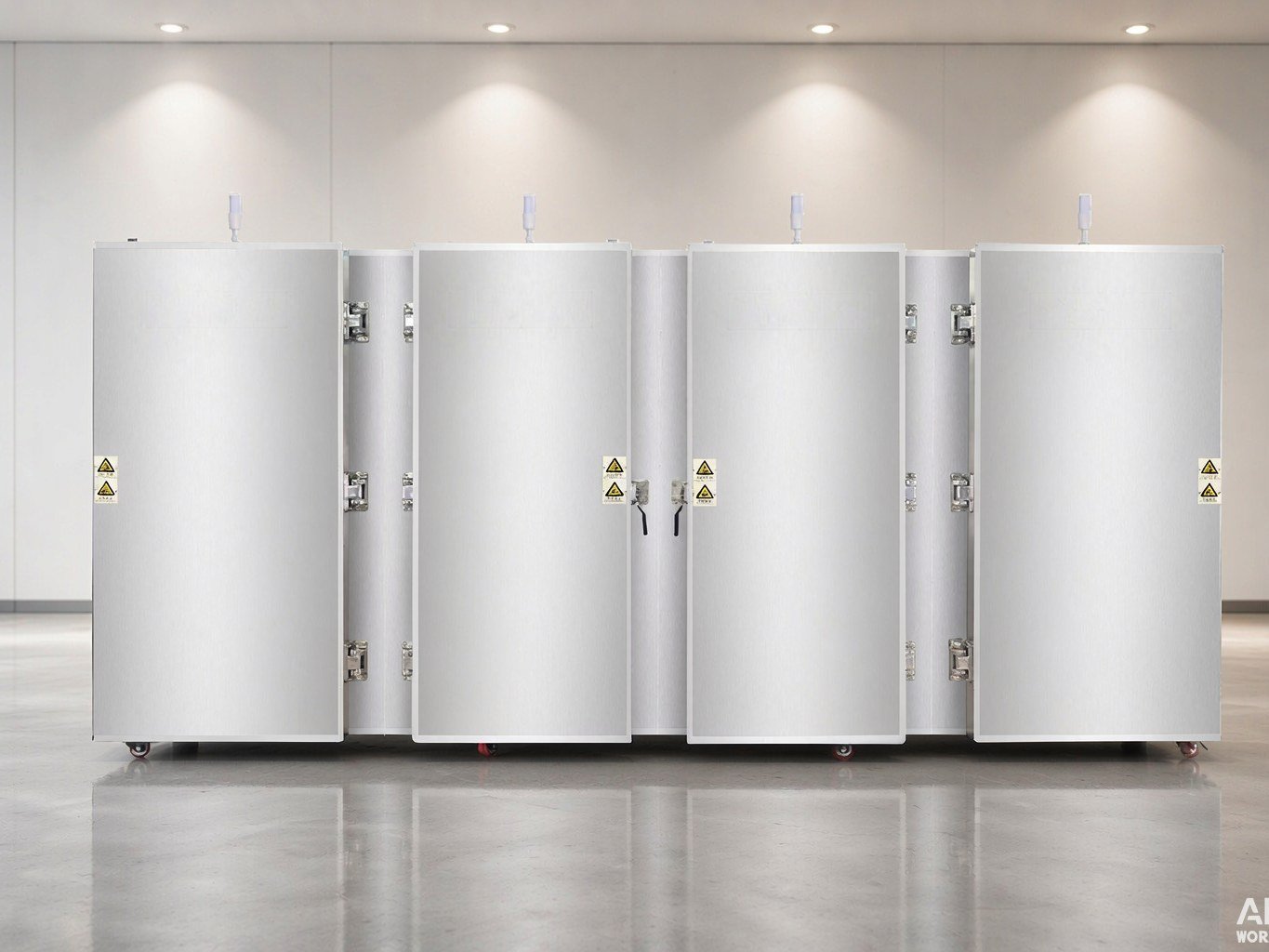
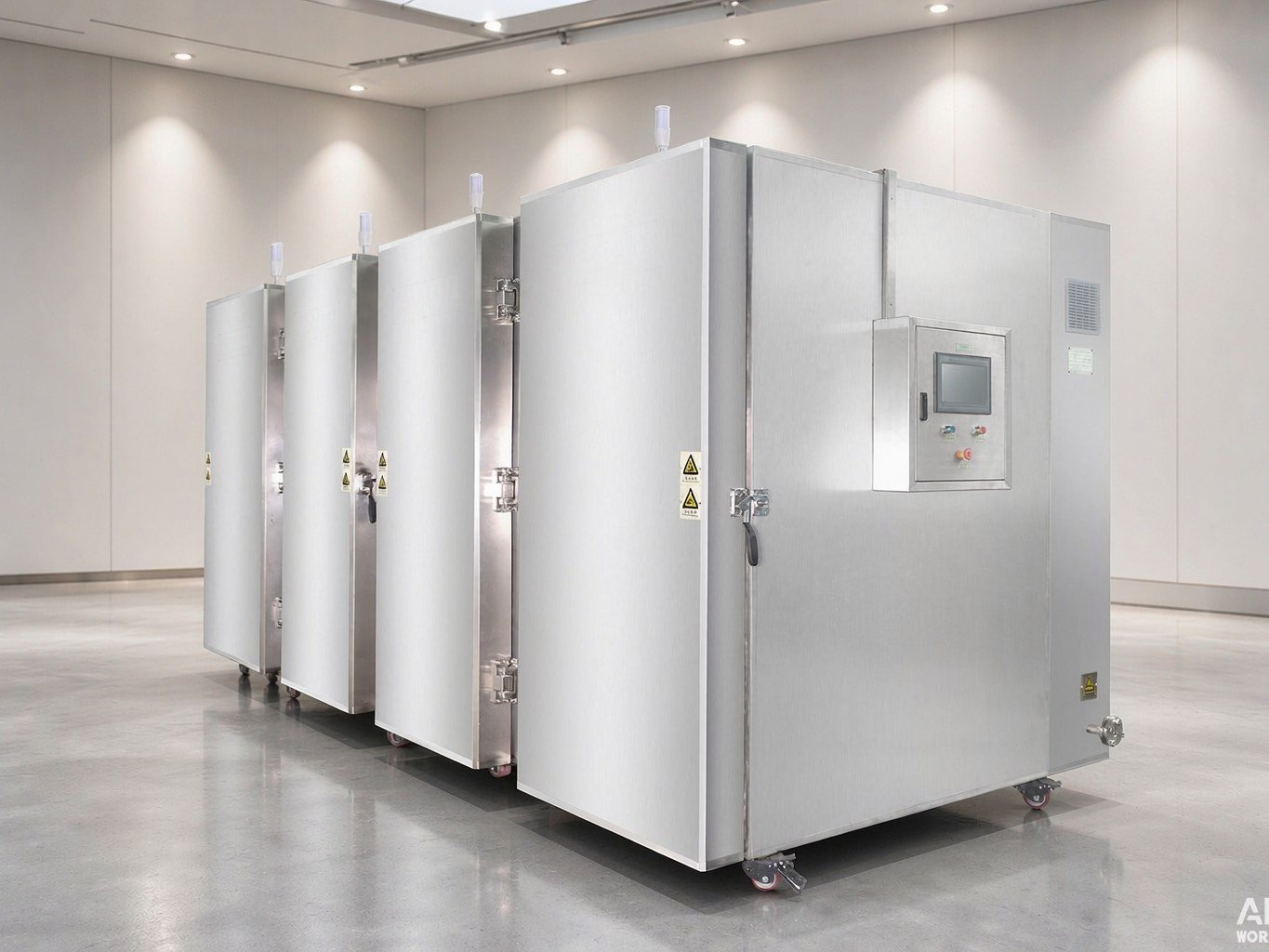
A poultry cut processing enterprise in Central China runs chicken legs, mid-wings and duck drumsticks as IQF, and after thawing the tray bottom must not hold water and the meat color must not turn pale or dull. These cut types vary widely in thickness, and freezing them in stacks easily overfreezes the outer layer while the inner layer has not reached temperature. For comparable capacity, the DKN-LFC-1200 liquid nitrogen freezer cabinet is matched, with the cavity divided into four zones, each zone loading 0–1200 kg, cuts placed by type in separate zones, and whole racks in and out.
I. Application Background
Products in a poultry cut workshop fall into three categories: cut poultry (legs, wings, breast, feet), duck and goose parts, and prepared poultry meat. The first two are high-volume, uniform in specification, and require individual quick freezing; prepared poultry meat carries marinade or breading and is mostly frozen tray-packed or box-packed.
Quality judgment is not only about whether the core temperature has reached -18℃. The meat temperature after cutting is still above 0℃, and how long the path from the cutting table to the freezer takes determines the state of the meat when it enters the cabinet. Workshops usually require single-layer tray loading without stacking.
II. Process Difficulties
When the maximum ice crystal band is passed slowly, cells are ruptured. Water in meat freezes in large amounts between -1℃ and -5℃, and the growth rate of ice crystals depends on how fast the temperature drops. When cooling is slow, large ice crystals form first outside the cells, pushing through the cell membrane; on thawing, juice flows out through the breaches — that is the puddle at the bottom of the tray. Fast freezing gives fine ice crystals, and the cell structure is preserved.
Cut types in the same cabinet vary widely. Mid-wings are thin and leg meat is thick; placed in the same layer, the thin pieces reach temperature first while the thick pieces are still sitting in the ice crystal band. Mixed loading results in thin pieces being overfrozen and pale and thick pieces failing quality standards; compensating by extending the overall time makes the thin pieces worse.
High volume, and stacking blocks both airflow and cold. Stacking two layers to catch up on volume means the contact surfaces cannot cool down and take pressure marks, and the pieces tend to stick together on discharge.
The tempering window after discharge is short. Once frozen pieces leave the cabinet and meet the humid workshop air, frost forms immediately; freezing again after tempering causes secondary crystallization.
III. Solution Configuration
This scenario is matched with the DKN-LFC-1200 liquid nitrogen freezer cabinet (four zones), parameters as follows (quoted from the product technical file):
| Item | Parameter |
|---|---|
| Cavity dimensions | 2000 × 1500 × 1750 mm, four zones |
| Working temperature | -150℃ ~ ambient |
| Temperature control accuracy | ±2℃ |
| Cooling rate | ≤50℃/min (no load) |
| Load | 0~1200 kg/single zone |
| Total power | 12 kW |
| Refrigerant | 6-8 BAR liquid nitrogen |
| Oxygen concentration monitoring | Oxygen concentration setpoint 19.5%-21.5% |
The configuration logic rests on zoning and load control. The four zones load and unload independently; the thin-piece zone and the thick-piece zone are used separately, and each zone sets its own in-and-out timing by cut type, so the whole cabinet time need not be stretched to accommodate the thicker pieces. Temperature control accuracy of ±2℃ keeps the set conditions consistent across batches in the same zone, so quality comparisons have a reference. The total power of 12 kW supplies fans and controls; cooling capacity is provided by liquid nitrogen, and power distribution is subject to order confirmation.
IV. Process Points
Zone by cut type; do not mix thin and thick. Thin pieces such as mid-wings and wing roots go in one zone, leg meat and whole breast meat in another, each scheduled for discharge by its own time to temperature.
Spread in a single layer with gaps. Leave airflow channels between pieces; liquid nitrogen cooling enters by convection and conduction, and stacked surfaces are dead corners for cooling. The load of 0~1200 kg/single zone is calculated by product specification and layer thickness, not by stacking higher to make up volume.
Cooling rate is equipment capability, not freezing time. ≤50℃/min is the no-load cooling capability; after loading it is affected by cut type, layer thickness and incoming temperature, and the actual value is lower. Judging how long a given cut type stays in the ice crystal band relies on loaded testing, recording the time for the core temperature to pass through -1℃ to -5℃; for the principle see Freezing Curve and Maximum Ice Crystal Band.
Control the incoming temperature. The lower the meat temperature after cutting, the less heat has to be removed and the faster the ice crystal band is passed. Loaded racks should not sit in the ambient area.
Check oxygen concentration before and after opening. Setpoint 19.5%-21.5%, with monitoring points covering the door operating position. Confirm the reading is normal before opening, and close the door promptly after discharge.
Record batches per zone. Infeed time, cut type, load, discharge time and measured core temperature are recorded by zone; one cabinet with four zones is four data sets. For a specification change, run a loaded test before scheduling production.
V. Suitable Users and Selection Advice
This configuration suits poultry cut and prepared meat processors with single batches from several hundred kilograms to the one-tonne level, many cut types and frequent specification changes. The cabinet’s zoning is flexible and its footprint relatively small; rotating four zones staggers loading and unloading, and the rhythm matches manual tray loading.
For a single product, continuous discharge for hours without stopping, and upstream/downstream lines, a tunnel line is more suitable; for mixed varieties and scattered batches, the cabinet is more convenient. For the basis of judgment see How to Choose a Liquid Nitrogen Freezer Cabinet, and for the differences between the two machine types see How to Choose Between Cabinet and Tunnel Freezers.
Full parameters of the DKN-LFC-1200 are on the DKN-LFC-1200 Liquid Nitrogen Freezer Cabinet product page. To check the configuration against your own cut types, single-batch weight and workshop flow, you can contact us.
FAQ
Why emphasize passing quickly through the maximum ice crystal band?
Water in meat freezes in large amounts between -1℃ and -5℃, and ice crystals grow rapidly in this range. When cooling is slow, coarse ice crystals form first outside the cells and push through the cell membrane; after thawing, juice flows out and the texture turns dry. What the equipment can do is provide sufficiently strong heat exchange conditions so that the product surface crosses this range as quickly as possible.
How does using four zones separately help quality?
Mid-wings and leg meat differ greatly in thickness and time to temperature. With zone placement, the thin-piece zone discharges by its own timing, avoiding overfreezing and paleness; the thick-piece zone is also given enough time for the core temperature to reach target.
Can the no-load 50℃ per minute drop be used directly to calculate freezing time?
No. This is the no-load cooling capability; after loading it is affected by cut type, layer thickness and incoming temperature, and the actual value is lower than the no-load figure. Production scheduling should be based on loaded testing, recording the time for the core temperature to pass through the ice crystal band and to reach -18℃.
Does a load of 0~1200 kg/single zone mean every batch can be filled to the maximum?
It is a loading range, not a recommended value. How much is actually loaded depends on cut specification, layer thickness and incoming temperature. The fuller the load, the longer the time to core temperature and the greater the temperature difference within the zone.